Remembering Professor John Philip Walters (1938-2026)
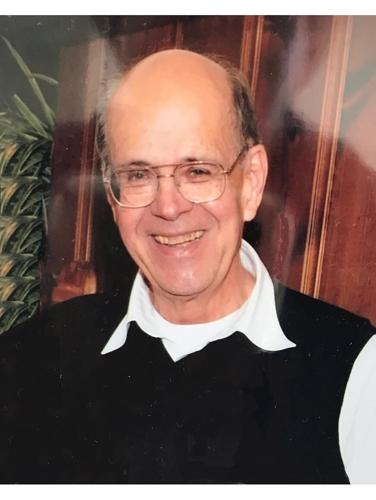
Professor John Philip Walters passed away on August 18, 2026, at the age of 88 years old. He was born in Elgin, Illinois, on July 4, 1938. Professor Walters joined the faculty at the University of Wisconsin—Madison’s Department of Chemistry in 1965, following his undergraduate education at Purdue University and earning his Ph.D. from the University of Illinois, Urbana, in 1964 in Analytical Chemistry under the direction of Prof. Howard V. Malmstadt, while studying the physical and chemical mechanisms of high-voltage spark discharges that were used for the emission spectrochemical analysis of aluminum and aluminum-based alloys. When he joined the department, he was accompanied by his wife, Barbara, of three years and their new son, John Anthony, who was one. He was appointed as assistant professor in the Analytical Division, focusing on a research program to understand the fundamental mechanisms of a variety of electrical discharges that could be put to practical use in metal and metal alloy analysis, including arcs, sparks, hollow cathode lamps, radio-frequency discharges, and hybridized combinations of them. Soon after joining the department, the couple had their second son, Thomas Philip, born in 1967.
Professor Walters was tenured and promoted to associate professor in 1969 and to full professor in 1972. From 1965 until he left in 1982, he published 65 research papers in that area and seven U.S. patents, mentored and graduated 17 doctoral students, 17 master’s students, and seven undergraduates. He consulted extensively for Globe Union in Milwaukee, WI, and Jarrell-Ash Corp. in Boston, MA, the latter licensing one of his spark source designs on an international basis for 16 years.
The years at the University of Wisconsin, Madison, between 1965 and 1971 were, to say the least, full of student unrest, rioting, and terrorism. While teaching undergraduate Analytical Chemistry during that time, John developed a strong rapport with his students, guiding them through the stressful times while concurrently helping them to focus on their studies instead of demonstrating in the streets. He found that his true calling was in this kind of work. In 1971, when the Sterling Hall Physics and Army Mathematics Research Center buildings were bombed, with a loss of life, he began the decade-long transfer from graduate education and federally sponsored research into pure undergraduate education. In 1982, Professor Walters left UW to join St. Olaf College in Northfield, Minnesota as a tenured Professor of Chemistry. Until his retirement in 2003, Professor Walters developed an undergraduate curriculum in Analytical Chemistry, taught class and lab courses in fundamental Analytical Chemistry, Instrumental Methods of Analysis, and the Uses of Computers in the Health Professions, and received national attention and several teaching awards from his peers. He enjoyed the challenges presented by his work and the enthusiasm of his many students.
Professor Walters is remembered by colleagues and former students alike as a mentor who met the challenges of his era with steadiness and care — first for the science, and always for the students in front of him.